
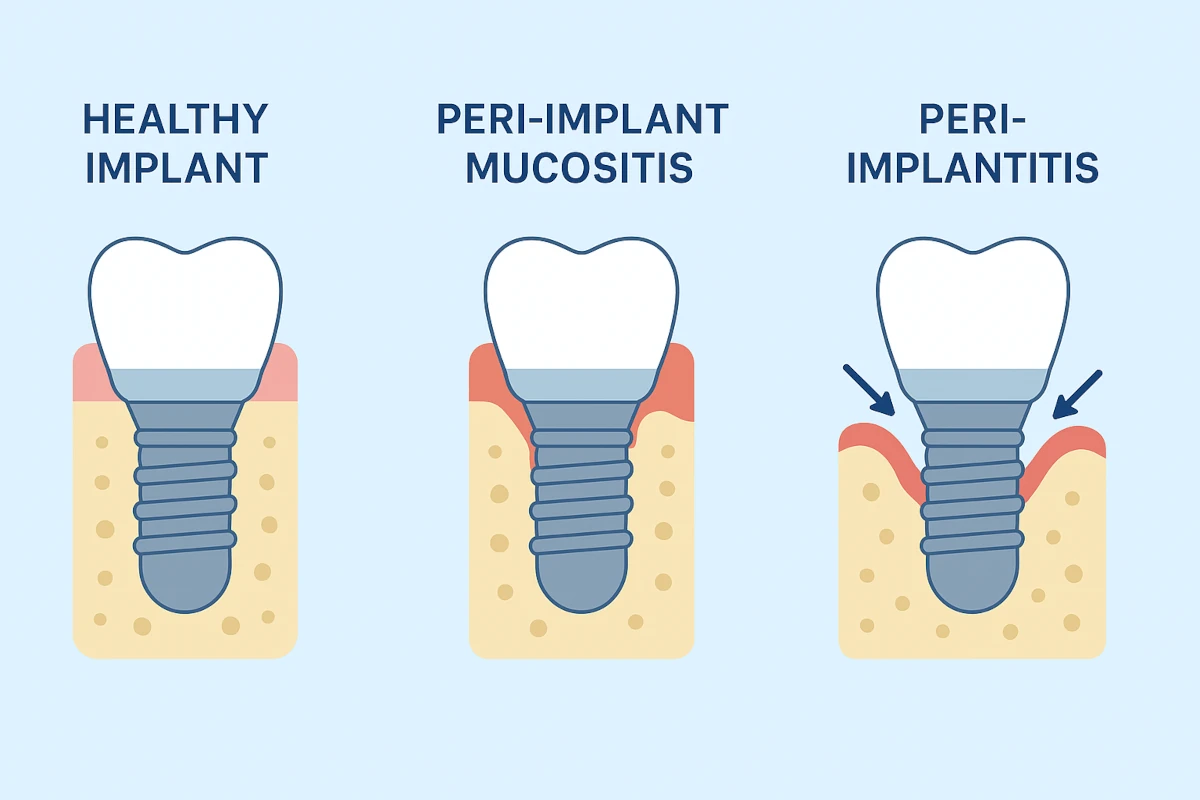
Peri-implant mucositis and peri-implantitis are inflammatory conditions that affect the gum tissue and bone surrounding dental implants. As gum specialists, we see how untreated peri-implant disease can progress, causing bone loss around implants and potentially leading to implant failure. Early treatment of peri-implant mucositis is critical, while advanced peri-implantitis often requires surgical intervention.
At Laser Smile Solutions, we help patients maintain healthy gum tissue and prevent bone loss around implants across NYC, NJ, Long Island, and Westchester.
What Is Peri-Implant Mucositis?
Peri-implant mucositis is inflammation of the soft tissue surrounding a dental implant. It is similar to gingivitis around natural teeth but occurs around an implant instead. Symptoms of peri-implant mucositis include:
- Redness and swelling of the gum tissue
- Bleeding on probing
- Mild discomfort around the implant
Patients with peri-implant mucositis often do not feel pain, which is why professional diagnosis and routine maintenance are essential. Left untreated, mucositis can progress to peri-implantitis, causing bone loss around implants.
What Causes Peri-Implant Mucositis and Peri-Implantitis?
The main cause is plaque accumulation and bacterial colonization on the implant surface. Other contributing factors include:
- Retained cement around restorations
- Poor oral hygiene
- Smoking, which increases the risk of progression
- Systemic health issues that affect the immune response
Peri-implantitis involves inflammation of both the gum tissue and bone, leading to marginal peri-implant bone loss and potential loss of the implant if not treated.
Diagnosing Peri-Implant Disease
Our periodontology specialists assess:
- Bone levels using radiographs or digital imaging
- Gum tissue health for swelling, redness, and bleeding on probing
- Clinical signs like suppuration and loss beyond crestal bone level
Early diagnosis allows for non-surgical management of peri-implant mucositis and timely intervention if peri-implantitis develops.
Non-Surgical Treatment of Peri-Implant Mucositis
Treatment of peri-implant mucositis focuses on controlling inflammation and removing plaque around the implant surface:
- Professional cleaning using ultrasonic and mechanical instruments
- Air polishing to remove debris
- Interdental brushes for home care
- Photodynamic therapy or short term use of systemic antibiotics if necessary
These measures help stabilize gum tissue, prevent progression, and maintain bone levels around the implant.
Surgical Management of Peri-Implantitis
When peri-implantitis develops, surgery is often required. Surgical options include:
- Flap surgery to access and clean the implant surface
- Mechanical debridement and removal of plaque and cement
- Bone regenerative procedures to restore lost bone
- Use of systemic antibiotics to control infection
Surgical treatment aims to stop the progression of peri-implant disease, rebuild lost bone, and preserve the stability of your dental implants.
Preventing Peri-Implant Disease
Prevention remains the most effective strategy:
- Maintain excellent oral hygiene with brushing, flossing, and interdental brushes
- Attend regular implant maintenance appointments
- Avoid smoking, which increases the risk of peri-implantitis
- Monitor restorations to ensure no cement is retained around implants
Patients who follow these guidelines can protect their implants and gum tissue from disease progression.
Why Choose Laser Smile Solutions?
We specialize in surgical and non-surgical management of peri-implant disease, helping patients protect their dental implants and preserve bone health. Whether you have single tooth implants, multiple implants, or full-arch restorations like All-on-4 implants, we provide expert care tailored to your needs.
Protect Your Smile in NYC, NJ, Long Island & Westchester
Peri-implant mucositis and peri-implantitis can compromise your implants, but early detection and expert treatment make a difference. Call us at (877) 440-3564 or schedule your free consultation online with our gum surgery specialists, and take the first step in protecting your dental implants and gum health.