
Crown lengthening is a common dental procedure to expose more of the tooth, by reshaping the gum around a tooth and, where necessary, the bone underneath. The name is misleading. Nothing about the tooth gets longer. What changes is how much of the existing tooth sits above the gum line, and how much of that portion of the tooth a restoration has to work with.
It is done for two quite different reasons, and they are worth separating early, because everything else about the procedure follows from which one applies.
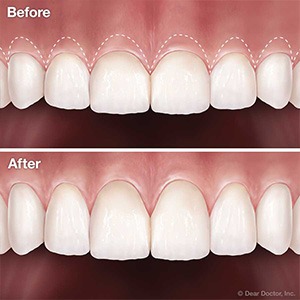
Functional And Esthetic Crown Lengthening
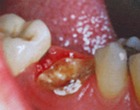
Functional crown lengthening is done so a tooth can be restored. A tooth broken or decayed near the gum line leaves too little tooth structure above it for a dental crown or filling to grip. Without enough tooth showing, the restoration has nothing to hold onto. Most patients who need crown lengthening arrive having been told so by the dentist who was about to place the crown.
Esthetic crown lengthening is done for appearance. The teeth are a normal length, but gum covers more of each tooth than it should, so they look short and square. Removing the excess tissue reveals the natural teeth that were already there. Where the cause really is gum, crown lengthening surgery does correct a gummy smile reliably, though it is not the only treatment for a gummy smile and not always the right one.
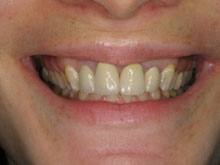
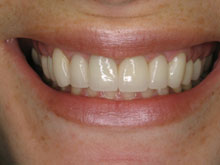
The surgery is broadly the same either way. What differs is how much precision the gum line needs, since a visible front tooth is judged against its neighbors and a molar is not.
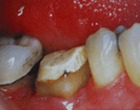
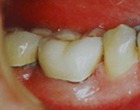
Why Bone Sometimes Has To Be Removed
This is the part that most explanations skip, and it is the reason two people quoted for the same procedure can be quoted very different figures.
The gum does not attach to the tooth at an arbitrary height. Below the base of the gum pocket sits a band of tissue attaching to the tooth and bone, and the body maintains a fairly consistent distance between the bone crest and the gum margin. The older term for it is biologic width, and that relationship is what sets the crown height available above the gum.
If gum alone is removed and the bone is left where it is, the body re-establishes that distance by growing the gum back. The result looks correct for a few weeks and then relapses. So where the bone sits too close to where the new gum line needs to be, a small amount of bone has to be reshaped as well.
Gum-only work is a gingivectomy. Gum and bone together is crown lengthening proper, and it is the more involved procedure. Judging which one a tooth needs is what the assessment is for, and getting it wrong is the most common reason the result does not hold.
What The Crown Lengthening Procedure Involves
Local anesthesia numbs the area first, and it can be combined with sedation.
Small incisions lift the gum tissue away from the tooth, giving access to the underlying bone and the root. Where only soft tissue needs adjusting, the excess is removed and contoured. Where bone removal is necessary, gum and bone tissue is reduced and reshaped around the tooth, and neighboring teeth are usually included so the gum line stays even rather than stepped.
The surgical site is then irrigated, the gum repositioned at its new height, and sutures placed. A laser handles much of the soft tissue work, which means less bleeding and often fewer sutures than a scalpel alone.
A periodontal dressing is sometimes placed as a bandage over the area for the first week.
One visit covers it. The duration depends on how many teeth are involved, how much tissue needs to be removed, and whether bone is being reshaped. Post-operative visits are part of the total treatment plan.
Is Crown Lengthening Painful?
Not during. The area is fully numb and the sensation is pressure rather than pain.
Afterwards, most patients describe soreness rather than pain, comparable to a deep filling, peaking in the first day or two and manageable with over-the-counter analgesics. An ice pack over the surgical area in twenty-minute intervals helps with swelling. Antibiotics are sometimes prescribed to prevent infection.
The teeth involved are often sensitive to hot and cold for several weeks, because more of the root surface is exposed than before. That settles.
Recovery And Healing Time
What Recovery Looks Like After Crown Lengthening
Recovery happens in stages, and mixing them up is where most of the confusion about healing time comes from. Being comfortable enough to go back to work is not the same as the gum tissue having finished settling, and the gum tissue settling is not the same as being ready for a final restoration. Each of those happens on its own schedule.
The First 24 Hours
Plan to take it easy for the rest of the day after surgery. Some discomfort is normal once the anesthesia wears off, and you should not eat until the numbness has fully gone.
Swelling is expected, particularly in the lower jaw. An ice pack wrapped in a light towel, held against the outside of your face over the treated area, keeps it down. Twenty minutes on, twenty minutes off, alternating sides if more than one area was treated.
Slight bleeding for the first few hours is common. If it persists, press a moistened tea bag against the site with firm but gentle pressure for fifteen to twenty minutes, rest, then repeat once if needed. Most of what you see is a small amount of blood mixed with a lot of saliva, which makes it look far worse than it is. If heavy bleeding continues, call the office.
The First Three Days
Switch from ice to a warm, moist compress after the first day, using the same twenty on, twenty off pattern.
You will be given specific instructions for managing discomfort. Most patients are prescribed an anti-inflammatory for the first few days, then move to over-the-counter pain relief as needed. Follow what your periodontist tells you rather than a general schedule.
Avoid strenuous activity and aerobic exercise during this window. High-protein foods and liquids are best for the first three to five days. Eggs, yogurt, custard, pasta, steamed vegetables, casseroles, and cooked cereals are all easy to manage.
The First Week
Brush normally everywhere that was not treated. In the treated areas, use a soft-bristled toothbrush only. If periodontal dressing was placed, brush just the chewing surfaces of those teeth.
Do not floss the treated areas during the first week, and do not swish. Rinses can be used, but let them sit and drain rather than moving them around the mouth. You may also be asked to swab the treated area with chlorhexidine on a cotton applicator at bedtime and again in the morning.
Skip spicy, salty, acidic, very hot, and very cold foods. Avoid nuts, chips, and anything crunchy or fibrous that can lodge between teeth. No smoking, no drinking through a straw, and no carbonated or alcoholic drinks for the first 48 hours.
The First Month And Beyond
Water irrigation devices such as Water-Piks should be left alone for a month after surgery.
Some patients are advised to take nutritional supplements for several weeks to support healing. A multivitamin with minerals, calcium, vitamin C, and vitamin E are typical examples. These are all over-the-counter items, but check the specific amounts with your periodontist rather than guessing.
If you wear a removable appliance that rests on the treated area, keep it out as much as you can. Pressure on the surgical site slows healing and causes discomfort.
Gum tissue continues to settle into its final position over several weeks. If crown lengthening was done to prepare for a crown or veneer, your restorative dentist will usually wait for that settling to finish before taking final impressions.
Every case is different, and the instructions you are given at your appointment take priority over anything here.
Risks And Disadvantages
Crown lengthening is a common procedure with a high success rate, but it has genuine trade-offs and they are worth knowing before agreeing to it.
Sensitivity. Exposing root surface means exposing dentine, which is more sensitive than enamel. Usually temporary, occasionally not.
A longer-looking tooth. That is the point, but on a front tooth the change is visible and the proportions have to be planned rather than improvised.
Bone loss is permanent. Bone that is removed does not come back. On a tooth already compromised, removing more support is a real cost, and it can shorten how long the tooth lasts.
Black triangles. Where gum is removed between teeth, small gaps can appear at the base. More likely with thin gum tissue.
Bleeding and infection, as with any surgery, though both are uncommon.
It may not be the right answer. If a tooth is so far gone that lengthening it would leave too little support, extraction and a dental implant is sometimes the better outcome. A periodontist should say so rather than proceed.
How Long Does Crown Lengthening Last?
Permanently, when the right version was done for the right reason.
Bone and gum removed do not regenerate, so the new gum line is stable once healing finishes. The exception is the one described above: gum removed without addressing bone that sat too high will regrow, and that is a planning failure rather than a normal outcome.
What can change afterwards is the gum around it, through gum disease or recession. The result depends on the gums staying healthy and on oral health generally, the same as any restorative work.
Crown Lengthening For A Gummy Smile
Crown lengthening is also used cosmetically, and it corrects a gummy smile when the cause is gum covering teeth of normal length. That is the most common cause, and where it applies the result is predictable: revealing more of the natural tooth that the gum was hiding.
It does not help when the cause is something else. A hyperactive or short upper lip lifts too far during a smile, and no amount of gum reshaping changes lip movement. Where the lip is the cause, lip repositioning surgery can reduce how much gum shows, and we perform it. One honest caveat: in gummy smile cases the display tends to return over time. Not to where it started, but it rarely stays fully corrected. For that reason Botox is often the more practical way to manage it, though it needs repeating every three to four months. Where the upper jaw has grown longer than average, the proportions are skeletal, which puts the case in the orthognathic world and calls for a surgeon with maxillofacial training. Where teeth have over-erupted, the answer is orthodontic. Sorting out which of these applies is the whole point of the assessment, and the gummy smile page covers the full set of causes.
What Crown Lengthening Costs
Nationally published figures put crown lengthening at roughly $800 to $3,000 per tooth. Soft tissue work sits at the lower end. Cases requiring bone reshaping sit at the upper end, which is the single largest factor in what any given case costs.
Insurance behaves differently depending on why it is being done. Functional crown lengthening, performed so a damaged tooth can be restored, is often covered at least in part. Cosmetic crown lengthening for a gummy smile generally is not.
Ask what the estimate covers. It usually includes the surgery and follow-up visits, and usually excludes X-rays and the crown that follows.
Alternatives To Crown Lengthening
Orthodontic extrusion. Rather than removing gum and bone to expose the tooth, the tooth is moved slowly upward to meet the existing gum line. It preserves bone and takes months rather than one visit.
Extraction and a dental implant. Where too little sound tooth remains, restoring it may not be worth the bone it costs.
Doing nothing, for now. A gummy smile is elective. Nothing about it requires treatment.
A different treatment entirely, where the cause of the gummy look is lip or jaw rather than gum.
Frequently Asked Questions
Is Crown Lengthening Worth It?
For a tooth that cannot otherwise be restored, usually yes, because the alternative is losing it. For cosmetic reasons the answer depends on how much the appearance bothers you and on how much bone the correction would cost. Worth asking specifically how much bone is coming off.
How Long After Crown Lengthening Can A Crown Be Placed?
Around three months for a back tooth. Three to six for a front tooth, where the gum line has to be fully settled before the margin is set. A temporary crown covers the interval.
Can I Go Back To Work After Crown Lengthening?
Most people go back the next day. Some swelling and soreness is normal for the first few days.
Will My Teeth Look Different Afterwards?
Yes, and that is intended. Teeth appear longer because more of the natural tooth is showing. On front teeth, symmetry with the neighboring teeth is planned before anything is removed.
Can Crown Lengthening Fail Or Need Redoing?
Occasionally. The usual reason is gum regrowth where bone was not adjusted, which is why the assessment matters. Rarely, healing produces an uneven gum line that needs a small revision.
Does Crown Lengthening Weaken The Tooth?
It removes some of the tooth’s support, so on a tooth already compromised there is a real trade-off. A well-fitted crown on a properly exposed tooth is generally stronger than an ill-fitting crown on an inadequate one.
Who Performs Crown Lengthening?
A periodontist will perform crown lengthening, usually on referral from the general dentist who identified that a tooth lacks enough structure to restore.
Schedule A Consultation
If your dentist has said a tooth needs crown lengthening before a crown can be placed, or if your teeth look shorter than they should, the assessment establishes which version of the procedure the case needs and whether bone is involved.
Call (212) 843-4311 or schedule a consultation online. Consultations are free.