
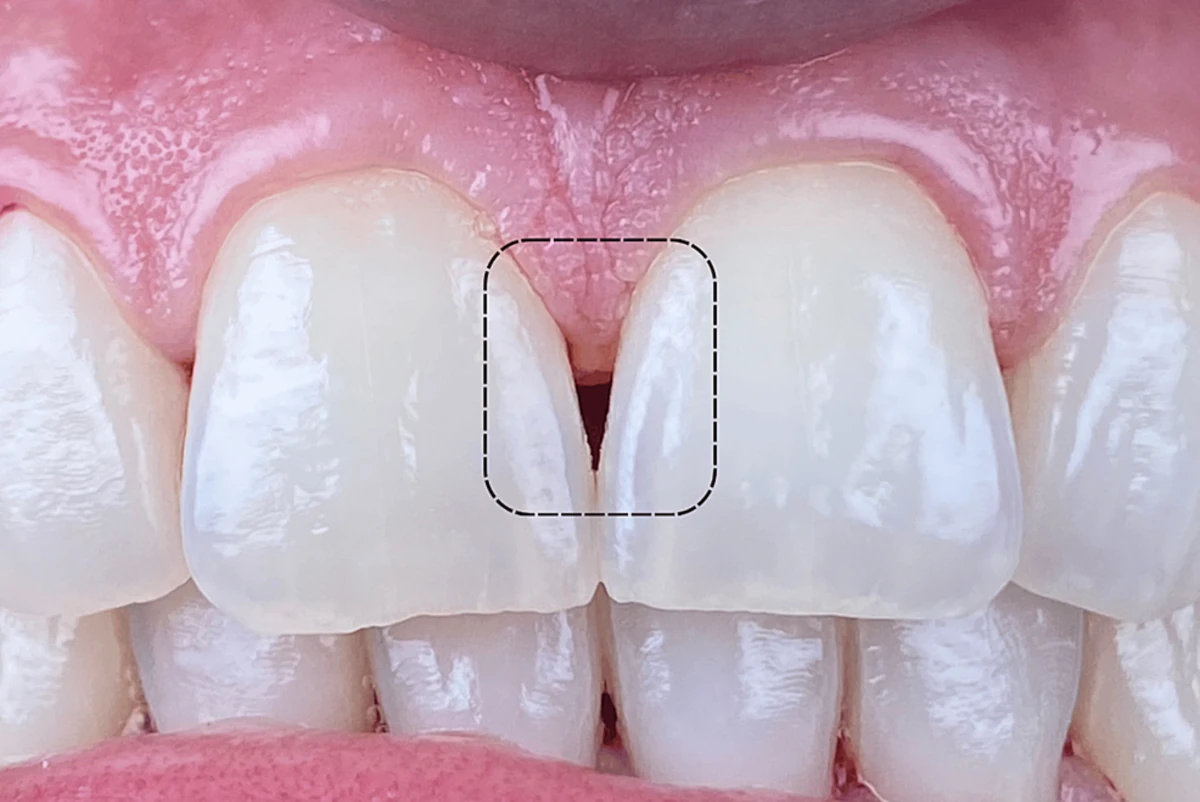
Black triangles between teeth, also known as black triangle teeth or gingival embrasures, are small triangular gaps that appear between your teeth and gums. These spaces can affect both your appearance and oral health. Many patients notice black triangles forming between their teeth as they age, after orthodontic treatment, or due to gum disease. Understanding what causes black triangles and how to treat them is key to restoring a healthy, confident smile.
What Is A Black Triangle, And Why Does It Form?
A black triangle is the space that appears between your teeth when the gum tissue does not fully fill the gap. These triangular tooth gaps, also called open gingival embrasures, look like black triangles when you smile. The formation of black triangles may be linked to gum recession, gum disease, or the natural shape of your teeth.
In some individuals, triangular teeth are more likely to result in black triangles compared to rectangular teeth. Triangles may form between your teeth if the gums pull away from your teeth or if the tissue between your teeth shrinks. This can leave gaps forming between your teeth that are noticeable, especially in the front teeth.
What Are The Main Causes of Black Triangles?
The causes of black triangles vary depending on your dental health and gum condition. Some of the most common causes of black triangles include:
- Gum disease can cause your gums to recede, resulting in gaps between your teeth.
- Orthodontic treatment, such as braces and other orthodontic appliances, can move your teeth and close gaps between them. Adults with braces developing black triangles are not uncommon.
- Gum recession, which causes your gums to recede and pull away from your teeth, can lead to black triangles.
- The shape of your teeth plays a role—triangular teeth are more likely to develop black triangles.
The likelihood of black triangles increases with age, and studies have shown that the presence of black triangles between their upper and lower incisor teeth was 22 percent in certain adult patients.
How Can You Fix Black Triangles Between Teeth?
Patients often want to fix black triangles for both cosmetic and oral health reasons. A dentist may recommend different treatment options depending on the severity of the gap between your teeth. Options for treating black triangles include:
- LANAP can stimulate the regeneration of gum tissue and encourage reattachment to the teeth if your black triangles are due to gum disease or gum recession. This may help reduce the appearance of black triangles by filling in some of the open gingival embrasures.
- Bonding or composite resin to fill the black gaps and eliminate black triangles.
- Orthodontic treatment using a brace to move your teeth into a more aligned position. Braces and other orthodontic treatments may help close triangle-shaped gaps between your teeth.
- Gum grafting to restore gum tissue around your teeth and fill open gingival embrasures.
Each treatment option is specifically designed to enhance the appearance of black triangles and promote long-term oral health. Consulting with our expert periodontists will help you select the most effective solution to address black triangles.
Can You Permanently Eliminate Black Triangles?
While some treatments can eliminate black triangles, others may only reduce their appearance. Composite bonding can reshape teeth and fill the space between your teeth, but gum disease or gum recession may still cause black triangles to return if left untreated. Gum tissue restoration through grafting may offer longer-lasting results.
For many patients, combining orthodontic treatment with gum care is the most reliable way to get rid of black triangles and prevent them from forming again.
How to Prevent Black Triangles in Teeth
Preventing black triangles between your teeth starts with good dental hygiene and gum care. If you brush and floss daily, you can help prevent the formation of black triangles by protecting your gums. Floss and brush your teeth properly to avoid gum disease and maintain strong gum tissue.
Other tips to prevent black triangles include:
- Attending regular dental checkups to spot early signs of gum recession.
- Maintaining healthy gums through proper dental hygiene and oral health routines.
- Ask your dentist about ways to prevent black triangles between teeth if you are considering orthodontic treatment.
Patients who maintain good gum care are less likely to develop black triangles in teeth and can avoid gaps forming between their teeth as they age.
What Treatment Options Are Available For Treating Black Triangles?
When it comes to treating black triangles, your dentist may suggest several approaches. If the black triangles can appear due to gum recession or gum disease, treating the gum issue is the first step. Gum grafts, bonding, and orthodontic treatments are all viable treatment options.
If you book a free consultation with our team, we will look at the position of your teeth, the gum line, and whether you have triangular or rectangular teeth to decide the best treatment option. The goal is to restore the tissue between your teeth and improve both your smile and dental health.
Why Addressing Black Triangle Teeth Matters for Oral Health
Many people first notice black triangles as a cosmetic dental issue, but these gaps also affect dental health. Black triangles may trap food, make it harder to floss, and increase your risk of gum disease. They can also lead to black triangles forming between your teeth as gums recede or teeth shift.
By treating black triangle teeth early, you can protect your teeth and gums, improve your oral health, and prevent further gum recession. If you have noticed small black triangles around your teeth and gums, it is best to call us at (877) 440-3564 to schedule a complimentary evaluation.