
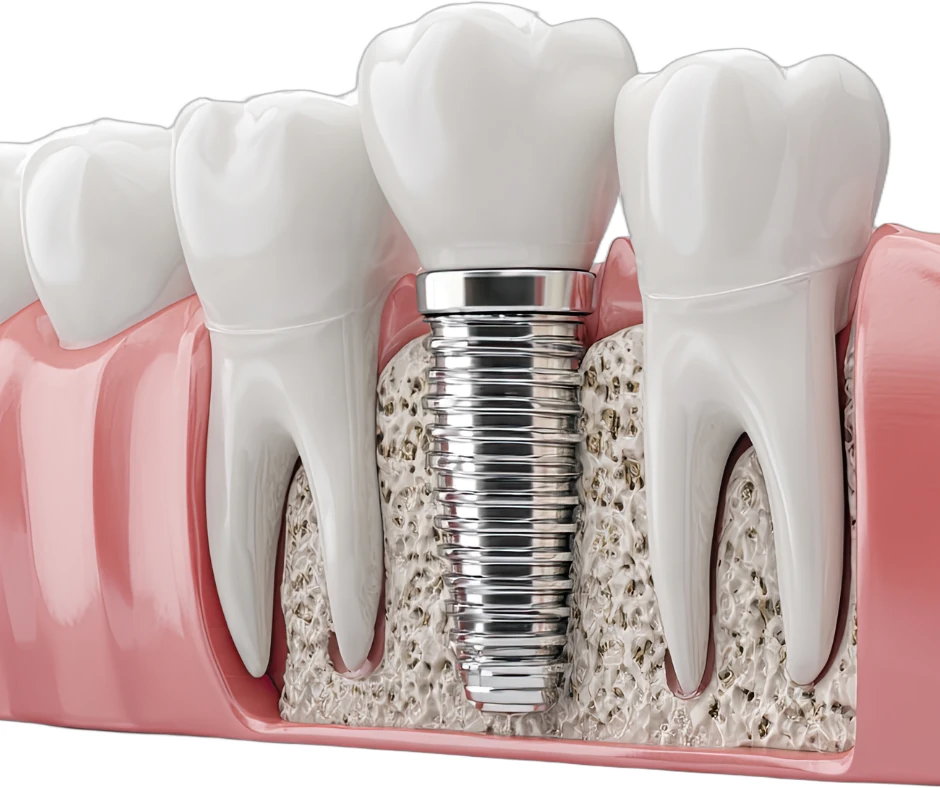
Dental implants represent a significant investment in your smile, your confidence, and your long-term oral health. So if you’ve recently been told that your implants are at risk because of gum disease or peri-implantitis, it’s natural to feel worried. Maybe even a little blindsided.
The truth is, implants can and do develop problems with the surrounding gum and bone tissue — and it happens more often than most patients realize. The equally important truth is that there’s an effective, minimally invasive way to address it before things progress further.
At our offices in Manhattan, Long Island, Westchester, and Nutley, we treat implant patients dealing with exactly this situation every day. Here’s what you need to know.
What Is Peri-Implantitis?
Peri-implantitis is an infection of the gum and bone tissue surrounding a dental implant. Think of it as gum disease — but around an implant rather than a natural tooth.
Like periodontal disease, it’s driven by bacterial buildup beneath the gumline. Left untreated, the infection causes the bone that holds the implant in place to break down. Over time, that can lead to implant loosening and ultimately implant failure.
Common signs of peri-implantitis include:
- Redness, swelling, or bleeding around an implant
- Tenderness or discomfort when chewing
- Visible bone loss on X-rays
- A feeling that the implant has shifted or feels different
- Pus or discharge around the implant site
It’s worth noting that peri-implantitis doesn’t always cause obvious pain in the early stages. Many patients have no idea anything is wrong until their periodontist or dentist spots it on a routine exam. This is one of many reasons why regular check-ups matter — especially if you have implants.
Why Implants Are Vulnerable
Natural teeth have a periodontal ligament — a network of fibers that connects the tooth root to the surrounding bone and acts as a kind of shock absorber and biological barrier. Implants don’t have this structure. The connection between an implant and the surrounding bone is more direct, which is what makes osseointegration so strong — but it also means that when bacteria do get a foothold, the infection can progress more quickly than it might around a natural tooth.
Patients who have a history of gum disease are at higher risk for peri-implantitis, which is why treating and stabilizing any existing periodontal disease before placing implants — and maintaining rigorous follow-up afterward — is so important.
How LANAP and LAPIP Treat Implant-Related Infection
This is where treatment gets a little more specific, and it’s worth understanding the distinction.
LANAP (Laser-Assisted New Attachment Procedure) is the gold-standard laser protocol for treating periodontal disease around natural teeth. It uses the PerioLase MVP-7 laser to eliminate infection, remove diseased tissue, and stimulate regeneration of the supporting bone and connective tissue.
LAPIP (Laser-Assisted Peri-Implant Procedure) is the companion protocol developed specifically for treating peri-implantitis around dental implants. It uses the same laser technology and the same fundamental approach — but is calibrated and applied with the specific anatomy of implants in mind.
Both protocols share the same core advantages over traditional surgical approaches: no cutting, rarely any sutures, minimal post-operative discomfort, and a same-day or next-day return to normal activity for most patients.
If you have both natural teeth and implants affected by disease — which is common — your periodontist may use both protocols in the same treatment plan, addressing everything comprehensively in a coordinated way.
What Treatment Actually Looks Like
We know that understanding the process helps ease anxiety, so here’s a clear picture of what to expect.
Your consultation. Your periodontist will examine both your natural teeth and implants, measure pocket depths, review X-rays for bone loss, and assess your overall gum health. You’ll leave with a clear diagnosis and a specific treatment recommendation — no vague next steps.
The procedure. Treatment is typically completed over two appointments, with half the mouth addressed at each visit. Local anesthesia ensures you’re completely comfortable throughout the procedure. The laser fiber accesses the infected tissue around each implant, clearing bacteria and diseased tissue with precision. Most appointments run two to three hours.
Recovery. The same qualities that make LANAP gentle make LAPIP gentle. Most patients return to their normal routine the following day. Mild soreness is common; significant pain is not. Over-the-counter pain relief is usually all that’s needed.
Follow-up and maintenance. After treatment, a consistent schedule of periodontal maintenance appointments — typically every three to four months — is essential. These visits allow your periodontist to monitor healing, keep bacterial levels low, and catch any early signs of recurrence before they develop into a bigger problem.
Can Every Implant Be Saved?
We wish the answer were always yes — but it might not always be possible.
The success of laser treatment for peri-implantitis depends significantly on the extent of infection. Implants caught in the early to moderate stages of peri-implantitis respond very well to LAPIP treatment, with strong evidence for bone stabilization and, in many cases, regeneration. Implants with severe bone loss around them may be beyond the point where treatment can predictably save them.
This is precisely why acting early matters so much. If you’ve been told there’s a concern around one of your implants — even if it seems minor right now — getting a proper evaluation sooner rather than later gives you the best possible chance of a straightforward outcome.
Protecting Your Implants Long-Term
Treating peri-implantitis is important. Preventing it from returning is equally important. A few things that make a meaningful difference:
- Consistent home care. Implants need just as much attention as natural teeth — daily brushing, flossing, and, if recommended, interdental brushes or a water flosser to clean around implant hardware.
- Don’t skip maintenance appointments. This is the single most important thing implant patients can do. Regular professional cleaning and monitoring help prevent peri-implantitis from progressing quietly between visits.
- Tell us about any changes. If something feels different around an implant — any tenderness, any shift in how it feels when you bite — call us. Early intervention is almost always simpler and more successful than waiting.
- Address gum disease comprehensively. If you have natural teeth with periodontal disease alongside your implants, treating the whole picture matters. Bacteria don’t stay in one place.
Your Implants Are Worth Protecting
You chose dental implants because you wanted a long-term solution — something that would last and feel natural. Peri-implantitis doesn’t have to derail that. With the right treatment at the right time, most affected implants can be stabilized and protected for the long haul.
Our periodontists across the Tristate area have extensive experience treating both periodontal disease and peri-implantitis, and we’re here to help you navigate this with as little stress as possible.
Call us at (877) 440-3564 to speak with our team, or book your consultation online at the location most convenient for you:
Let’s make sure your implants stay healthy for the long term. We’re ready to help.
Frequently Asked Questions
What’s the difference between LANAP and LAPIP? LANAP treats periodontal disease around natural teeth. LAPIP is the same laser technology adapted specifically for treating peri-implantitis around dental implants. Many patients receive both as part of a comprehensive treatment plan.
How do I know if my implant has peri-implantitis? Symptoms can include redness, swelling, bleeding, or tenderness around an implant — but many cases show no obvious symptoms early on. Regular check-ups with your periodontist are the most reliable way to catch it.
Is LAPIP covered by dental insurance? Coverage varies by plan, but many insurance providers that cover periodontal treatment also cover LAPIP. Our team will review your benefits with you before treatment begins.
Can peri-implantitis come back after laser treatment? It can, which is why ongoing maintenance appointments are so important. Patients who keep up with their follow-up care have significantly better long-term outcomes.
What happens if peri-implantitis is left untreated? Without treatment, the infection continues to destroy the bone supporting the implant. This can ultimately lead to implant failure and the need for removal.